Understanding Human Growth Hormone Peptides
src="http://pagead2.googlesyndication.com/pagead/show_ads.js">
- GHRH (Growth Hormone Releasing Hormone)
- GHRP (Growth Hormone Releasing Peptide)
- Growth Factors
- Lypolitic Peptides
- hGH (Human Growth Hormone) - this is not a GH peptide, rather, this is the 'real deal'
There are three popular and clinically proven GHRH analogs on the market today, CJC-1293, CJC-1295, CJC-1295 DAC, and Sermorelin. CJC-1293 is a longer lasting peptide- it is sometimes also referred to as tetrasubstituted GRF(1-29) or Modified Sermorelin. It has a half life of about 30 minutes where Sermorelin has a half life with a duration about 7 minutes. The half life of CJC-1293 is more desirable and establishes a significant enough of a GH pulse to increase IGF-1 levels and HGH levels. CJC-1295 DAC has a half life of several days; however, it's pulsatile release is more of a sustained-consistent release that does not necessarily mimic that of the human pituitary gland.
The combination of GHRH and GHRP will significantly raise HGH levels. The image included at the bottom of this page illustrates the synergistic effect from the combination of GHRH + GHRP.
GHRH Growth Hormone Releasing Hormone (AKA GRF)
GHRH1-44, also known as Growth Hormone Releasing Hormone (other synonyms are GRF and GHRF), is a peptide that is produced in the hypothalamus and secreted to stimulate the release of human growth hormone (hGH). It consists of a 44 amino acid long sequence and is released in a pulsatile fashion similar to the pulsatile release of hGH. The active portion of this peptide can be found as a 29 amino acid long peptide and is appropriately named GHRH1-29. This pulsatile release of various peptides is due to the negative feedback loop that is part of the hGH axis and controls the amount of hGH that your body produces to keep it in a homeostatic environment. Despite the effectiveness of GHRH to stimulate growth hormone release there are a number of problems associated with using it in vivo. The most noteworthy problem is the half life of the peptide, which has been shown to be ~7 minutes using advanced HPLC technologies that have proven to be very accurate. The reason for this relatively short half life is due to an enzyme called dipeptidylaminopeptidase IV (DPP-IV), which has a high affinity for the amino acids Ala and Pro and in the case of GHRH it cleaves the 1 and 2 positions that consist of Tyr-Ala, creating GHRH3-29, an inactive form of the peptide. To prevent the problems associated with natural GHRH, pharmaceutical companies looked at new ways to increase the half life and bioavailability of these smaller peptides with technologies that work far different than other technologies, such as PEGylation.
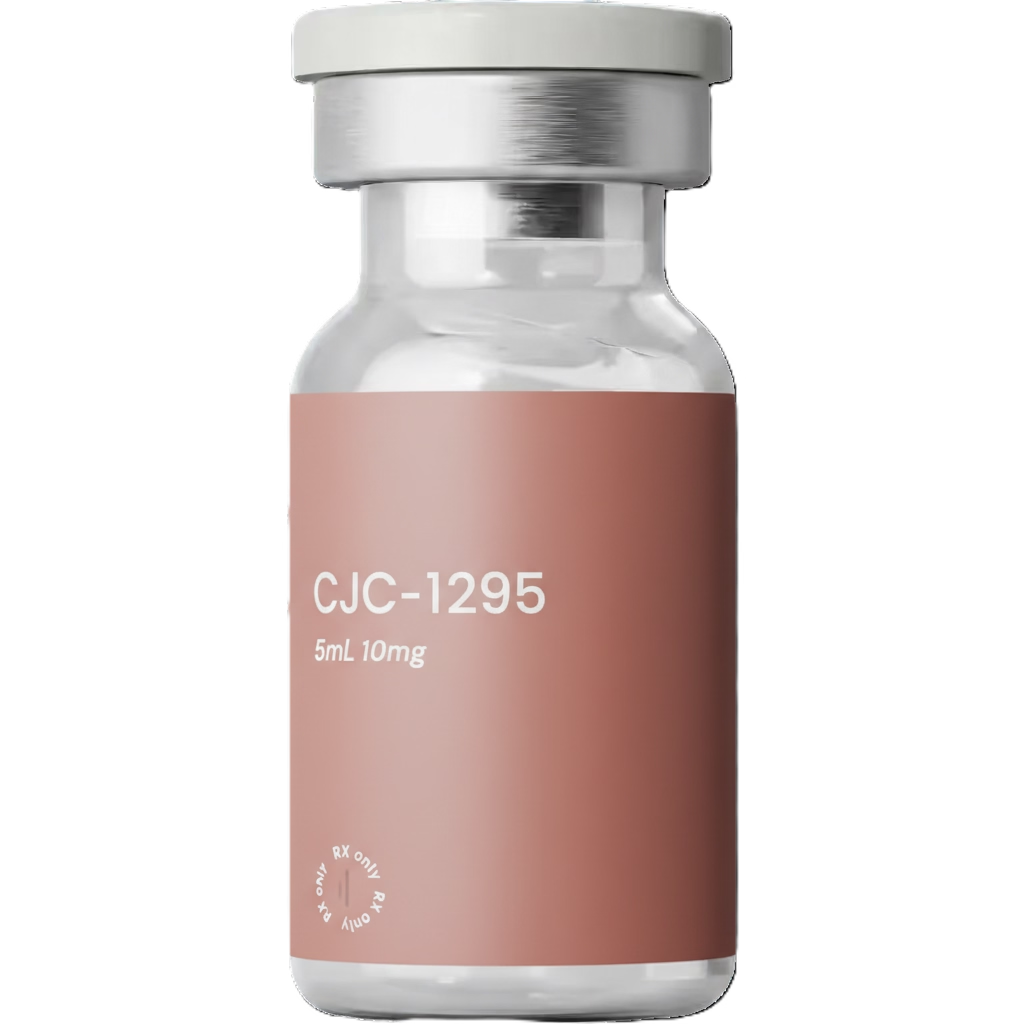
This brings us to introduce of a far more stable form of GHRH called CJC-1295. CJC-1295 is a tetrasubstituted peptide analogue of GHRH with D-Ala, Gln, Ala, and Leu substitutions at positions 2, 8, 15, and 27 respectively. These substitutions create a much more stable peptide with the substitution at position 2 to prevent DPP-IV cleavage, position 8 to reduce asparagine rearrangement or amide hydrolysis to aspartic acid, position 15 to enhance bioactivity, and position 27 to prevent methionine oxidation. These substitutions are key in increasing the overall half life of CJC-1295 but there lies an even greater reason as to why the half life has been extended from ~7 minutes to greater than 7 days! Bioconjugation is a relatively newer technology that takes a reactive group and attaches it to a peptide, which in turn reacts with a nucleophilic (usually a partially negative molecule) entity found in the blood to form a more stable bond. Albumin, one of the most abundant substances in the human body is chosen as the nucelophile by this particular peptide thanks to a Cys34 thiol group that attracts it. By combining the tetrasubstituted GHRH analogue with maleimodoproprionic acid using a Lys linker, you create a GHRH peptide with a high binding affinity for albumin. Once the CJC-1295 molecule has attached itself to albumin, it is given an extended half life and bioavailability thanks to the albumin preventing enzymatic degredation and kidney excretion. In fact, bioconjugation is so effective that there was less than 1% of CJC-1295 left unreacted in vivo and over 90% was stabilized after subcutaneous injection. This means that you get more of what you paid for working for you. There was no DPP-IV degredation observed on CJC-1295 in any of the various experiments conducted.
Due to the extremely long half life of CJC-1295 it is plausible to use this peptide once per week with outstanding results. Much like compounds such as testosterone enanthate, however, it would be wiser to use ½ dosages twice per week to keep serum levels high and to get maximal GH release and limit the pulsatile fashion of hGH. Various experiments have been conducted to test the effectiveness of CJC-1295 in vivo and the Journal of Clinical Endocrinology & Metabolism has reported dose-dependent increases in mean plasma GH concentrations by 2-10 fold for more than 6 days and increased IGF-1 concentrations 1.5-3 fold for 9-11 days after a single injection! Not only that but they proved the mean half life to be 5.8-8.1 days and after multiple doses showed mean IGF-1 levels remained above baseline for up to 28 days following! No serious adverse reactions were reported in any group. The graphs below show that this peptide has the ability to stimulate growth hormone very significantly and is much more cost effective than illegally buying hGH.
Another very positive benefit of CJC-1295 is its ability to promote slow wave sleep. Slow wave sleep is also known as deep sleep and is the portion of sleep responsible for the highest level of muscle growth and memory retention. SWS is decreased significantly in older adults and also with people who tend to exercise later in the evening. This peptide has a benefit to side effect ratio that exceeds all others currently being legally sold and would make a great addition to ones training regimen or post cycle therapy.
CJC-1295 is a tetrasubtituted peptide of 29 amino acid length, primarily functioning as a growth hormone releasing hormone (GHRH) analog. It was invented by ConjuChem, a Canadian biotechnology company.
One of the advantages of CJC-1295 over traditional GHRH or rHGH is its ability to bioconjugate with serum albumin, thus increasing its half-life and therapeutic window. It accomplishes this by using protecting groups around the amino acids of GHRH typically susceptible to enzymatic degradation.
ConjuChem initiated clinical trials for CJC-1295 during the mid-2000s. The objective of the drug was to treat visceral fat deposits in obese AIDS patients, as increased levels of exogenous HGH are presumed to increase lipolysis (fat loss). The trial was ultimately successful for most research subjects, but the drug's marketing stalled when three of the trial's patients suffered a myocardial infarction.
[edit]
Although the majority of children with isolated growth hormone (GH) deficiency have a good growth response to GH-releasing hormone (GHRH), the use of this therapeutic agent is limited by its very short half-life. Indeed, we have shown that, in mice with GHRH gene ablation (GHRH knockout; GHRHKO), even twice-daily injections of a GHRH analog are unable to normalize growth. CJC-1295 is a synthetic GHRH analog that selectively and covalently binds to endogenous albumin after injection, thereby extending its half-life and duration of action. We report the effects of CJC-1295 administration in GHRHKO animals. Three groups of 1-wk-old GHRHKO mice were treated for 5 wk with 2 µg of CJC-1295 at intervals of 24, 48, and 72 h. Placebo-treated GHRHKO mice and mice heterozygous for the GHRHKO allele served as controls. GHRHKO animals receiving daily doses of CJC-1295 exhibited normal body weight and length. Mice treated every 48 and 72 h reached higher body weight and length than placebo-treated animals, without full growth normalization. Femur and tibia length remained normal in animals treated every 24 and 48 h. Relative lean mass and subcutaneous fat mass were normal in all treated groups. CJC-1295 caused an increase in total pituitary RNA and GH mRNA, suggesting that proliferation of somatotroph cells had occurred, as confirmed by immunohistochemistry images. These findings demonstrate that treatment with once-daily administration of CJC-1295 is able to maintain normal body composition and growth in GHRHKO mice. The same dose is less effective when administered every 48 or 72 h.
CJC-1295
A synthetic human GHRH analog that selectively and covalently binds to endogenous albumin after subcutaneous administration, thereby extending its half-life and duration of action (11, 12). Studies in animals (rats, pigs, and dogs) have shown that several days after a single administration of CJC-1295, serum IGF-I levels are still increased (5). In a recent report, CJC-1295 administered to healthy subjects has been proven to be effective in causing a sustained dose-dependent stimulation of serum GH and IGF-I levels when injected at intervals of 1–2 wk (14).GROWTH HORMONE RELEASING HORMONE
(GH)-releasing hormone (GHRH) is a 44-amino acid peptide that stimulates GH secretion and somatotroph cell proliferation in the pituitary gland through its active 1-29 NH2-terminus peptide (10). Although daily injection of recombinant human GH is presently the only therapeutic option available for patients with GH deficiency (GHD), GHRH may represent a more valid and physiological approach, especially for children with isolated GHD, in whom this condition seems to be related to altered hypothalamic function rather than to impaired GH secretory capacity (16). However, GHRH has limited therapeutical use in children because of its very short half-life (9), requiring multiple daily injections or infusion by a pump. Similarly, we have previously demonstrated that long-term treatment with twice-daily injection of a GHRH superanalog is only partially able to restore somatotroph hypoplasia and growth in the GHRH knockout (GHRHKO) mouse (2).The primary aim of this study was to determine the minimum frequency of injections that could correct the GHD phenotype in the GH-deficient GHRHKO mice, as measured by improvement of auxological parameters and body composition. Second, we wanted to assess the stimulatory effect of CJC-1295 on somatotroph cell proliferation. We show that once-daily injections of 2 µg of CJC-1295 are able to completely normalize growth. Furthermore, administration of the same dose of CJC-1295 every 48 or 72 h produced intermediate results, indicating an interval-dependent effect. Click the following link to read more about the study on growth peptides.
GHRP (Growth Hormone Releasing Peptide)
A Growth Hormone Releasing Peptide (GHRP) is needed to create a pulse. GHRP comes in several forms, including GHRP-6, GHRP-2, Ipamorelin, and Hexarelin. Each of the aforementioned peptides cause an increase in Growth Hormone through the same mechanism of action. GHRP will blunt somatostatin and increase natural GHRH release. So if you inject a GHRP, you create a pulse of GH which rises for 30 minutes, peaks, and then comes down within 2 hours. This action mimics that of a natural pulse.IPAMORELIN
is about as efficacious as GHRP-6 in causing GH release, but even at higher dose (above 100mcg) it does not trigger an increase of prolactin or cortisol.GHRP-6
at the saturation dose 100mcg does not really increase prolactin & cortisol but may do so slightly at higher doses. This rise is still within the normal range.GHRP-2
is a little more efficacious then GHRP-6 at causing GH release but at the saturation dose or higher may produce a slight to moderate increase in prolactin & cortisol. This rise is still within the normal range although doses of 200 - 400mcg might make it the high end of the normal range.HEXARELIN
When it comes to increasing Growth Hormone Release, Hexarelin is the most efficacious of any known GHRP. However it has the highest potential to also increase cortisol & prolactin. This rise will occur even at the 100mcg saturation dose. This rise will reach the higher levels of what is defined as normal.Growth Factors
There are many different growth factors on the market. IGF-1 is often referred to as The “Holy Grail” of anti aging. When taken responsibly, IGF-1 can help improve muscularity and healing and recovery times. IGF-1 can also stimulate a decrease in body fat, an increase in lean muscle mass, improved skin tone and restful sleep. IGF-1 has also been documented to increase the rate and extent of muscle repair after injuries or strains. IGF-1 also has a positive affect in the aging process. It can prevent age-related degeneration of muscles, skin tissue and bones.When IGF-2 is combined with IGF-1, it intensifies and creates a symbiotic relationship with IGF-1, thus the combination results in a beneficial & desirable response. IGF-2 also increases something called Steroidogenesis, which is the bodies’ affinity to produce its own natural hormones. Due to this affinity it also exhibits stronger fat burning properties than IGF-1 and the combination of the two seems to be profound; in at least two peer reviewed abstracts it was found that some sort of inhibition of myostatin was derived from the combination of the two.
Lypolitic Peptides
HGH fragment 176-191 is a stabilized analog of the growth hormone-releasing factor (GRF) that induces growth hormone in a specific and physiological manner. To date studies suggest that hGH fragment 176-191 has several beneficial features: it reduces abdominal fat (in particular- visceral fat), without compromising glycemic control (blood glucose), it increases muscle mass and improves the lipid profile.The GHRH + GHRP Combination
You can dose 250mcg of a GHRP (i.e. GHRP-6, GHRP-2, Ipamorelin or Hexarelin) with 100mcg of CJC-1295 or modified GRF(1-29). 100mcg of each is a minimal clinical dose but doses as high as 400mcg at a time have some effect. You use the GHRH + GHRP every time you want a pulse. You ALWAYS want one pre-bed. In men the biggest amount of GH release occurs at night, which accounts for 80% of the total amount of Growth Hormone released in a 24 hour period! GH release and slow wave sleep are positively correlated. You increase/decrease one you increase/decrease the other. It takes just 100mcg of each to get this deeper sleep. You also want to dose PWO and in the morning. That is 3 times a day. You can go as many as 6 times a day.
[click image to enlarge]
Online Monetization Services Powered by: Salganik Solutions, Inc; a Dallas SEO Company & Interactive Agency Specializing in Small Businesses, and turning content-driven websites into income producing assets.